Skip to content
hyperkalemia

Hyperkalemia: Latest Management Guide

Hyperkalemia (a serum potassium K+ > 5.5 mmol/L) is one of the most common and dangerous electrolyte emergencies. It is a “silent killer” that can progress from an asymptomatic lab finding to a fatal arrhythmia within minutes. Effective management requires… 
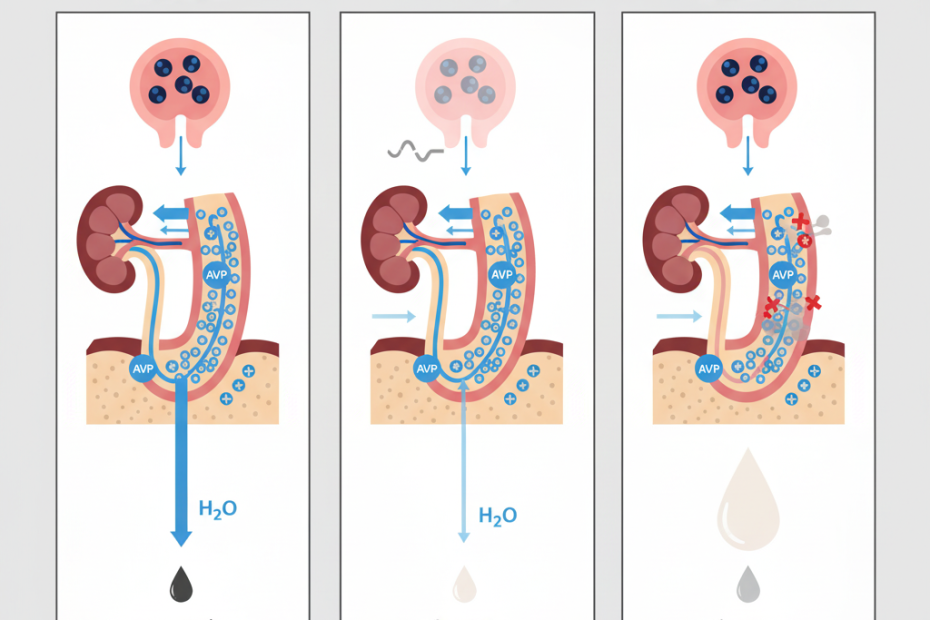
diabetes insipidus mechanism

Guide to Diagnosing and Managing Diabetes Insipidus (DI)

Diabetes Insipidus (DI) is a critical syndrome of fluid imbalance characterized by the production of large volumes of dilute urine (polyuria), leading to intense thirst (polydipsia). It stems from a problem with Arginine Vasopressin (AVP)—the Anti-Diuretic Hormone (ADH)—which regulates water… 

potassium infusion bag

Hypokalemia Management: Guide to IV Potassium Replacement

Hypokalemia, defined as a serum potassium (K+) level below 3.5 mmol/L (normal range: 3.5–5.5 mmol/L), is a frequently encountered electrolyte imbalance, affecting over 20% of hospitalized patients. While often initially asymptomatic, this seemingly benign deviation can rapidly escalate to life-threatening complications, including…